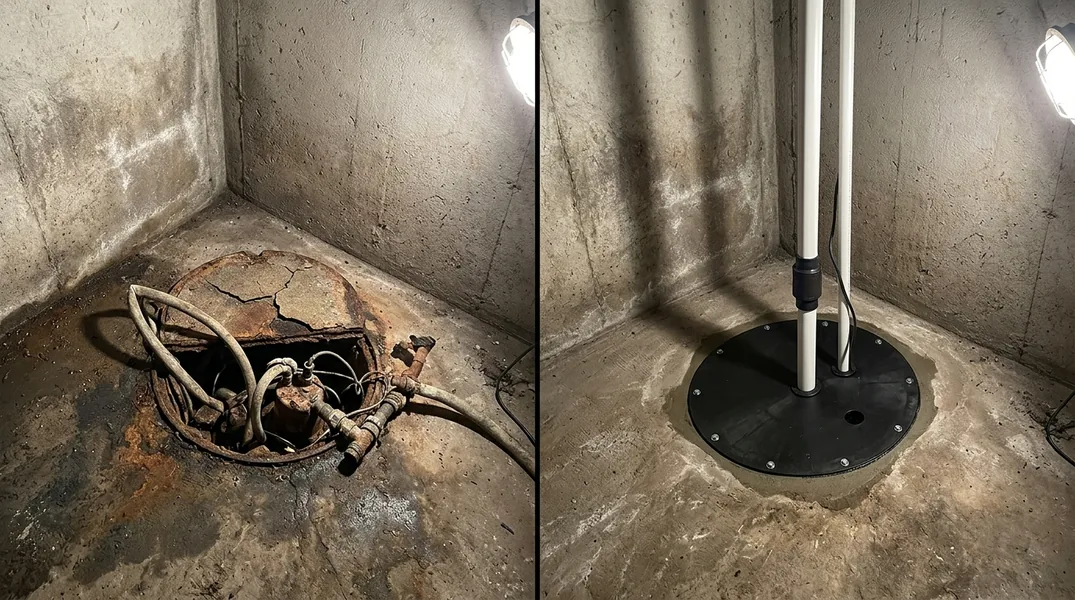
Why Spring Storms Put Your Sump Pump to the Test in Chattanooga
Spring in Chattanooga brings more than blooming dogwoods and longer days. It brings intense, sustained rainfall that saturates the soil around your foundation and sends groundwater pushing against your basement walls. For homeowners in low-lying areas or on sloped lots, that water has to go somewhere, and your sump pump is the first line of defense. When it works, you never think about it. When it fails during a storm, you can end up with inches of water in your basement before the rain even stops.
The problem is that sump pumps sit idle for months during drier stretches. That idle time is exactly when parts corrode, float switches stick, and discharge lines freeze or clog. By the time the first big spring storm rolls through, a pump that ran fine last year may not be ready for the workload. A little preventive maintenance now is far cheaper than emergency water extraction and the mold remediation that often follows. If you are not comfortable inspecting the system yourself, a professional Basement Waterproofing contractor can evaluate the whole setup.
Sump Pump Maintenance Checklist Before Storm Season
Start with the basics: unplug the pump, then lift the float or tether to see if the switch engages smoothly. If it sticks or feels gritty, clean it or replace it. Next, look inside the pit. Debris, gravel, and sediment can jam the impeller, so scoop out any buildup and make sure the pump sits level on a solid base. Pour a few gallons of water into the pit to test the pump under real conditions. It should kick on quickly, drain the pit, and shut off cleanly. If it hesitates, runs loudly, or cycles on and off repeatedly, that is a warning sign.
Do not overlook the discharge line and the sump pump check valve. The check valve keeps water from flowing back into the pit after the pump shuts off, and a failed valve means the pump runs twice as hard for the same result. Inspect the valve for cracks or mineral buildup and confirm the discharge line slopes away from the foundation and does not terminate near a downspout or window well. If your pump is more than seven to ten years old, plan for replacement before the heavy rains arrive rather than gambling on one more season.
Battery Backup Sump Pump: Your Safety Net When the Power Goes Out
Here is the scenario that catches homeowners off guard: a severe spring storm knocks out power at the same moment the heaviest rain is falling. Your primary sump pump is fine, but it cannot run without electricity. Within an hour or two, the pit overflows and water starts spreading across the basement floor. A battery backup sump pump solves that problem by running on a charged battery when the grid fails. It also serves as a second line of defense if the primary pump jams or burns out mid-storm.
Battery backups need their own maintenance. Test the battery monthly using the unit's test button, and check the water level in flooded-cell batteries every few months. Most backup batteries last three to five years, so note the install date and replace it before it fails silently. If your basement is finished or holds stored belongings you cannot afford to lose, the backup is not optional in a storm-prone region like this. Pairing it with a properly designed Interior Drain Tile System gives you layered protection instead of relying on a single pump.
Sump Pump Maintenance Near Me: When to Call a Professional
Some tasks are reasonable DIY projects: testing the float, clearing debris, and pouring water to confirm operation. But if you notice rust on the housing, a burning smell, strange grinding noises, or a pump that runs constantly without moving water, it is time to call a pro. The same goes for a pit that fills faster than the pump can handle, which often points to a drainage problem beyond the pump itself. A technician can diagnose whether the issue is the pump, the check valve, the discharge line, or the foundation drainage system as a whole.
Homeowners in Signal Mountain and Lookout Mountain often deal with hillside runoff that overwhelms undersized pumps, while properties in Red Bank may face high water tables after prolonged rain. The right fix depends on your lot, your foundation, and how water actually moves through your soil. A professional assessment can also tell you whether Exterior Basement Waterproofing or Foundation Waterproofing should complement your sump system. For a no-pressure evaluation, request a free estimate or call (423) 275-4684.
Sump Pump Service Cost in Chattanooga: What to Budget
Budgeting for sump pump maintenance is straightforward once you know what to expect. A basic service visit that includes testing, pit cleaning, and a check valve inspection typically falls in the range of a standard home service call. Replacing a worn check valve is a modest add-on, while installing a new primary pump or a battery backup unit costs more but protects against far larger expenses. Compare that to the cost of water damage restoration, ruined flooring, and mold treatment, and the preventive spend looks small.
Exact pricing depends on your pump type, pit condition, and whether additional drainage work is needed. Chattanooga Waterproofing provides clear, upfront numbers before any work begins, so you are never surprised by the invoice. If your system is older or you have never had it serviced, schedule an inspection before the first spring storm rather than after the damage is done. Call (423) 275-4684 to get started.
Looking for a professional basement waterproofing contractor in Chattanooga? Chattanooga Waterproofing responds fast for all your basement waterproofing needs.
Get a Free QuoteOur services: Basement Waterproofing · Interior Drain Tile System · Exterior Basement Waterproofing