Why Walk-Out Basements on the Mountain Are Different
If you own a home on Lookout Mountain or Signal Mountain, you already know the views are spectacular. What you might not know is that those stunning slopes come with a hidden challenge: your walk-out basement’s uphill wall is under constant pressure from groundwater moving down the mountain. Unlike a standard basement that’s buried on all four sides, a walk-out design leaves one wall exposed to the downhill side while the uphill wall acts like a dam holding back saturated soil. That difference changes everything about how water behaves around your foundation.
On the mountain, heavy rains soak into the rocky, clay-heavy soil and then travel downhill through the path of least resistance, which is often right against your uphill foundation wall. Over time, that water finds its way through basement wall cracks, cold joints, and porous concrete. The result is a damp lower level, musty odors, and eventually structural concerns. Understanding this dynamic is the first step toward keeping your mountain home dry and comfortable year-round.
Common Signs of Uphill Wall Moisture in Mountain Homes
Many homeowners on the mountain first notice a problem when they smell a musty odor in the lower level or see white powdery deposits on the concrete. That white substance, called efflorescence, is a telltale sign that water is moving through the concrete and evaporating on the surface. Other clues include dark staining near the top of the uphill wall, peeling paint, or a chalky feel on the block. If you have finished space downstairs, you might see warped baseboards or soft spots in the drywall along that uphill side.
It’s also common to find water seeping through the seam where the floor meets the wall, especially after a heavy storm. Because the uphill wall is constantly wetted, hydrostatic pressure builds up beneath the slab and pushes water upward. Left unaddressed, this moisture can lead to mold growth, insect activity, and deterioration of stored belongings. If you’re seeing any of these signs, it’s worth having a professional take a look before the next rainy season arrives.
Basement Waterproofing Near Me: When to Call a Pro
Not every damp spot requires a full excavation, but some situations do call for an expert eye. If your uphill wall has visible cracks wider than a hairline, or if water is actively trickling in during storms, it’s time to call a professional. The same goes for recurring musty smells that don’t go away with a dehumidifier. On the mountain, the combination of slope, soil type, and freeze-thaw cycles means DIY fixes like surface sealers often fail within a season or two. A pro can identify whether the issue is coming from the uphill side, the footing drain, or both.
At Chattanooga Waterproofing, we specialize in mountain-home basement leak solutions. We start with a thorough inspection of the uphill foundation wall, the exterior grade, and the interior drainage. Then we recommend a solution tailored to your home’s specific slope and soil conditions. Whether you need crack injection, interior drainage, or exterior waterproofing, we’ll explain your options clearly and help you decide what makes sense for your budget and long-term goals. Call us at (423) 275-4684 to schedule a free estimate.
Solutions for Keeping the Uphill Wall Dry
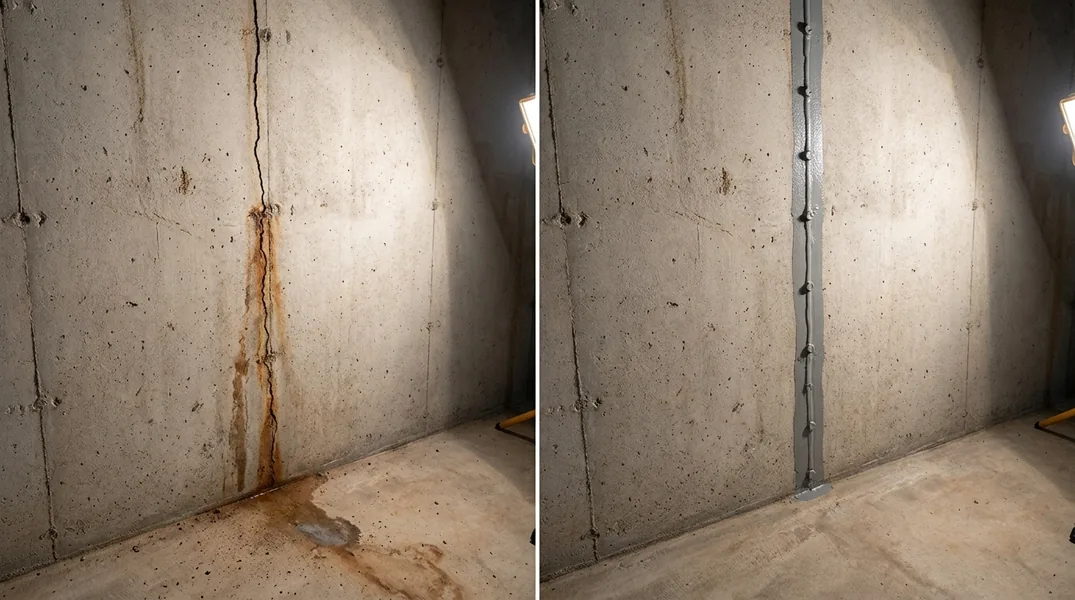
There’s no one-size-fits-all fix for a walk-out basement on the mountain. In many cases, the best approach combines several strategies. For active cracks, we use epoxy or polyurethane injection to seal the opening from the inside, which stops water from entering while allowing the wall to flex. For broader moisture issues, an Interior Drain Tile System can capture water at the base of the uphill wall and redirect it to a sump pump, keeping the floor dry even during heavy rain. This is often the least invasive and most cost-effective option for mountain homes where exterior digging is difficult due to slope or landscaping.
When the problem originates outside, Exterior Basement Waterproofing may be necessary. This involves excavating the uphill side, applying a waterproof membrane, and installing a drainage board and footing drain to divert groundwater away from the foundation. It’s a bigger project, but it addresses the source of the pressure directly. We also offer Foundation Waterproofing to seal cold joints and prevent water from entering through the footing. During your inspection, we’ll discuss which combination makes the most sense for your home and provide transparent pricing so you can plan accordingly.
Preventive Steps Every Mountain Homeowner Should Take
Even if your basement is dry today, the unique pressures of mountain living mean it’s smart to stay proactive. Start by checking the grade around your uphill wall. Soil should slope away from the foundation at a rate of about six inches over the first ten feet. If you have landscaping beds, mulch, or patios that slope toward the house, regrade them. Also keep gutters and downspouts clear and extend them well away from the uphill side so roof water doesn’t add to the groundwater load. These simple steps can dramatically reduce the volume of water that reaches your foundation.
It’s also wise to inspect the uphill wall a couple of times a year, especially after heavy spring rains. Look for new cracks, efflorescence, or damp spots. If you spot anything concerning, don’t wait. Small issues are much easier and less expensive to fix than full-blown leaks. And remember, a professional inspection can catch problems you might miss, like hidden cracks behind drywall or a failing footing drain. A little prevention goes a long way toward protecting your mountain home’s value and comfort.
Why Choose a Local Chattanooga Waterproofing Expert
Mountain homes on Lookout and Signal Mountain aren’t the same as basements in the valley, and the solutions shouldn’t be either. A local expert who understands the region’s soil, slope, and weather patterns can tailor a waterproofing plan that actually works. We’ve seen firsthand how water moves on these mountains, and we know which products and techniques hold up to our specific conditions. That local knowledge saves you time, money, and frustration.
If you’re ready to take control of moisture in your walk-out basement, reach out to Chattanooga Waterproofing. We serve homeowners across Red Bank and the surrounding areas, and we’re happy to answer your questions. Call (423) 275-4684 or visit our website to request a free estimate. Let’s keep your uphill wall dry and your lower level comfortable for years to come.
Looking for a professional basement waterproofing contractor in Chattanooga? Chattanooga Waterproofing responds fast for all your basement waterproofing needs.
Get a Free QuoteOur services: Basement Waterproofing · Interior Drain Tile System · Exterior Basement Waterproofing